Introduction
You’ve been eating the same, exercising the same, and yet — your body seems to have a new plan.
The culprit? Often, it’s declining estrogen, which begins well before your final menstrual cycle. This shift doesn’t just change your periods — it rewires how your body stores fat, builds muscle, regulates mood, and even sleeps.
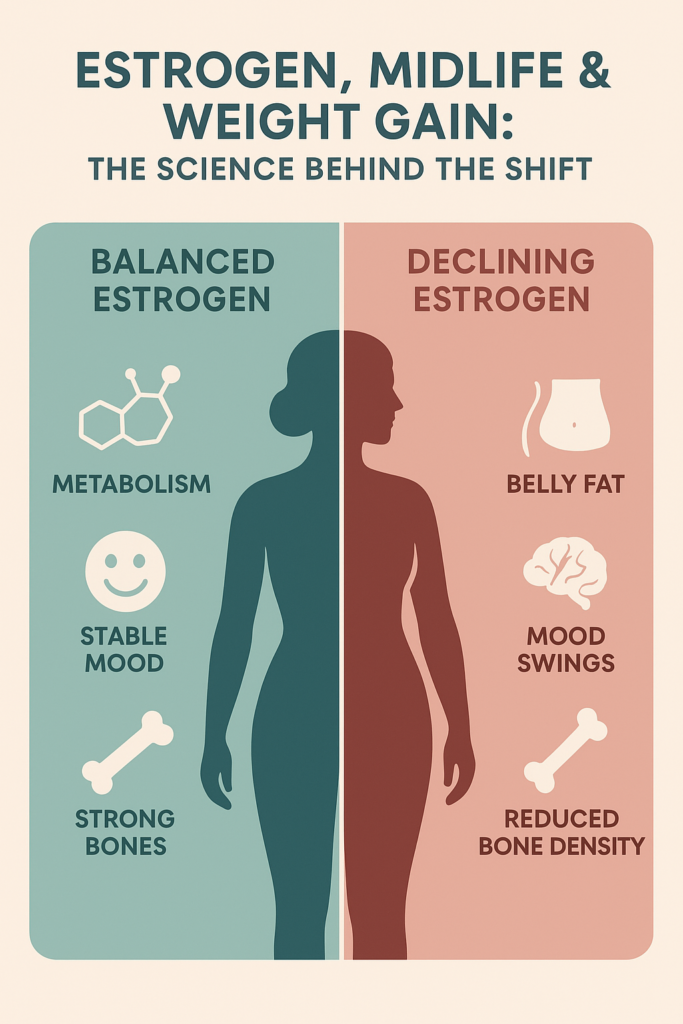
1. Estrogen’s Role in Fat Distribution
Estrogen helps maintain fat storage in the hips and thighs, which is metabolically protective. When estrogen drops:
- The waist-to-hip ratio increases, shifting fat storage to the abdomen.
- This “central adiposity” is linked to insulin resistance and a slower metabolism.
- Visceral fat (around organs) increases — this is not just a cosmetic issue; it’s a metabolic risk factor.
What helps: Strength training + moderate carb cycling can counteract fat redistribution by improving insulin sensitivity.
2. Impact on Muscle Mass
Estrogen plays a role in muscle protein synthesis and neuromuscular coordination. Declines mean:
- Faster loss of lean muscle mass (sarcopenia).
- Reduced strength and functional mobility.
- Slower recovery from exercise.
What helps: Progressive resistance training, adequate protein (1.2–1.6 g/kg body weight), and incorporating eccentric loading exercises.
3. Sleep Disruption
Lower estrogen impacts serotonin and melatonin production, leading to:
- Lighter sleep stages.
- Increased nighttime awakenings.
- More difficulty falling back asleep.
What helps: Sleep hygiene, magnesium-rich foods, and keeping a consistent bedtime can make a difference.
4. Brain Function & Mood
Estrogen supports neurotransmitters like dopamine and serotonin. Its decline may trigger:
- Brain fog.
- Mood swings, irritability, and anxiety.
- Lower motivation.
What helps: Regular exercise, omega-3 fatty acids, and mindfulness-based practices improve neuroplasticity and mood regulation.
5. Bone Health
Estrogen is essential for bone remodeling. Its loss leads to:
- Accelerated bone density decline.
- Higher risk of osteopenia and osteoporosis.
What helps: Weight-bearing exercise, vitamin D, and calcium-rich foods (or supplementation if needed).
Conclusion
Estrogen decline is inevitable — but its effects are not.
By adjusting your nutrition, training, and lifestyle, you can offset fat gain, protect your bones, sharpen your mind, and restore your sleep.