Introduction:
When we talk about midlife changes, estrogen often takes center stage. But there’s another hormone quietly shaping how women feel, sleep, and manage weight — progesterone. Known as the body’s “calming hormone”, progesterone works hand in hand with estrogen to regulate cycles, balance mood, and protect long-term health. As levels dip during perimenopause and menopause, the effects ripple across sleep, metabolism, and overall wellbeing.
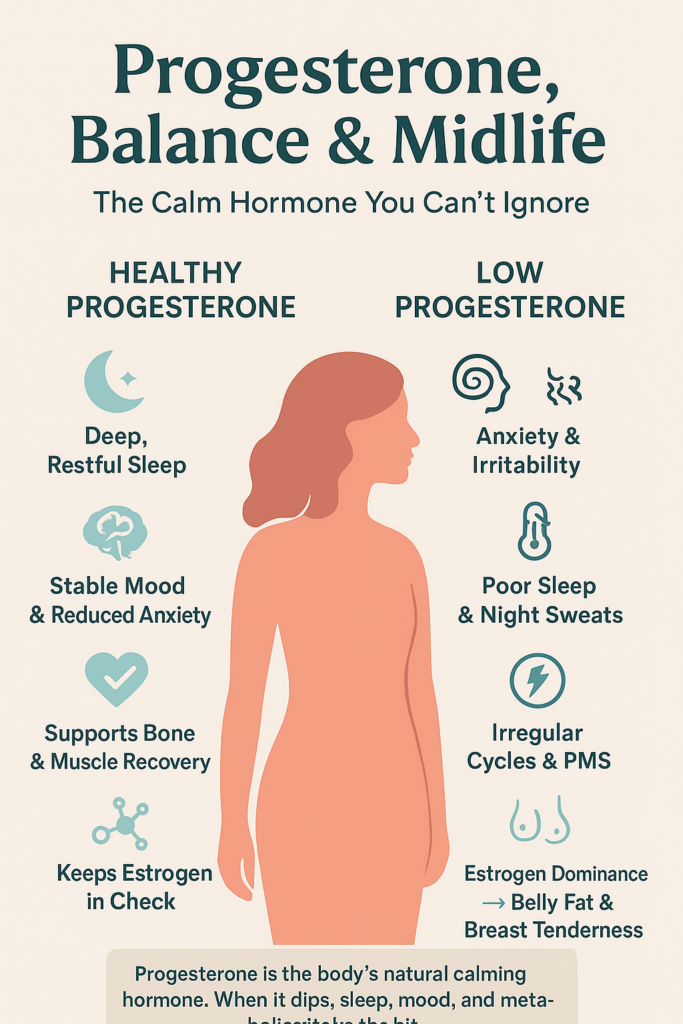
What Progesterone Does
- Balances Estrogen: Prevents estrogen dominance that leads to bloating, weight gain, and breast tenderness.
- Supports Sleep: Boosts GABA in the brain, helping with deep, restful sleep.
- Stabilizes Mood: Reduces anxiety and irritability, acting like the body’s natural anti-stress agent.
- Protects Bones & Muscles: Plays a role in tissue repair and recovery.
What Happens When Progesterone Declines
- Irregular cycles and heavier periods in perimenopause
- Insomnia and frequent night waking
- Increased anxiety, irritability, and mood swings
- Hot flashes and night sweats
- Estrogen dominance → belly fat, water retention, breast tenderness
Can You Support Progesterone Naturally?
While we can’t fully stop the natural hormonal shift, lifestyle makes a huge difference:
- Nutrition: Adequate protein, magnesium, vitamin B6, and healthy fats.
- Stress Management: High stress raises cortisol, which suppresses progesterone.
- Exercise: Strength training and restorative practices like yoga balance hormones.
- Sleep Hygiene: Quality sleep helps regulate hormonal rhythms.
Conclusion
Progesterone is more than just a fertility hormone — it’s the anchor of midlife balance. Supporting it through the right nutrition, exercise, and recovery strategies can make the transition smoother and healthier.